


Expert on heat pumps: when choosing, the airtightness of the house matters more than its size
Efficient home heating is one of the most important questions for those building new homes or renovating existing ones. For some time the most popular choice was gas heating, and quite a few people used solid fuel boilers, while at present attention is turning more and more to heat pumps, which heat rooms using ambient heat rather than fossil fuel.
According to Mindaugas Beniušis, head of the Heating and Air Conditioning Department at Baltic Refrigeration Group, a heat pump takes energy (heat) from the air, water or ground, and then, raising the temperature in a thermodynamic cycle, passes it to indoor units that heat rooms or domestic hot water.
“Heat pumps are easy to install or to integrate into an existing heating and hot water system, they reduce heating costs, and they release no harmful substances into the environment. The ‘fuel’ of these pumps is the heat of air, water or ground, for which the user does not have to pay extra, as for gas or firewood, so these devices are both economical and beneficial to the environment,” says NØRDIS heat pump expert M. Beniušis.
The heat source of the home is air
There are several different types of heat pumps on sale, but they all work on the same principle; the key difference is where the heat is taken from and where it is released. Air-to-air heat pumps take energy from the outdoor air, heat or cool it depending on the season and blow it into the rooms with a fan. Air-to-water heat pumps also get their energy from the outdoor air, but transfer the generated heat to an underfloor or radiator water heating system. Geothermal, or ground-to-water pumps work in the same way as air-to-water ones, only they get their energy from the ground.
According to the expert, the simplest and cheapest choice is air-to-air heat pumps, but they are more suitable for smaller houses or for heating individual rooms. In addition, these pumps are not designed for hot water preparation. The most efficient choice is a geothermal heating system – the unit always runs in the same mode, because the ground temperature is the same in winter and summer, and there is no outdoor unit or source of noise, but this option is also the most expensive.
People in Lithuania are most inclined to choose air-to-water heat pumps, which M. Beniušis calls the optimal option in terms of the ratio of comfort provided to price.
“These heat pumps are ideal for rooms with underfloor heating, which has recently been installed in almost every private house or cottage being built. In addition, their price is much lower than that of geothermal pumps, they are easier to install, and they both heat rooms and prepare hot water at practically the same efficiency,” he assures.
Heat losses matter more than the size of the house
When choosing an air-to-water heat pump, one of the most important parameters to pay attention to is its seasonal coefficient of performance (SCOP), which should be as high as possible. It shows the ratio of the heat produced to the electricity consumed for it and is calculated according to an approved methodology. If a heat pump’s SCOP is 4, it means that having consumed 1 kW of electricity, it will produce 4 kW of thermal energy.
“The output of the heat pump is also important. It is often mistakenly thought that it should be selected solely by the area of the house. In fact, the airtightness of the house and its heat losses are very important parameters. A house may be small but leaky, with many thermal bridges and leaky windows through which heat escapes from inside very quickly. In that case a heat pump selected only by area will not work efficiently, and the user will be dissatisfied with the device, although in reality it was simply badly chosen and is not suitable for their house. Therefore, before buying a heat pump it is important to know the heat losses of the house, which must be calculated by competent specialists-designers,” says the interviewee.
He says that problems usually do not arise if the energy class of the house is A, A+ or A++, because such houses are usually built in compliance with the design requirements. If the house is of class B or lower, this usually means that unassessed heat losses will be higher, so a more powerful heat pump will be needed.
“It is also important what system is installed in the house – underfloor or radiator heating. With correctly installed underfloor heating, an air-to-water heat pump does not need to prepare high-temperature heat carrier for heating rooms, so the unit works efficiently. The situation is different with radiators, which need a higher-temperature heat carrier to warm up, so the heat pump is less efficient,” emphasizes M. Beniušis.
According to him, residents often ask whether air-to-water heat pumps can heat a house efficiently in winter, when the outdoor air temperature drops well below zero. Heat pumps have built-in electric heating elements with an electrical output of up to 9 kW. When the outdoor temperature is very low and the pump’s compressor is no longer able to transfer the required amount of heat, the heating elements begin to generate additional heat using electricity.
What to take into account
To install a heat pump, it is important that the electrical supply has sufficient capacity. “Usually the capacity of the supply is not sufficient in houses of older construction and in country homesteads. If the capacity is enough for an oven and a hob, the electrical reserve may not be enough for a heat pump. In that case the solution is to increase the capacity of the electrical supply, if that is possible and not too expensive for the resident.
Heat pumps (like all electronics) are very sensitive to large voltage fluctuations; these ‘jumps’ usually burn out the pump’s control boards and damage it. Therefore, before deciding to buy a heat pump, you must know the capacity of your electrical supply, and the specialists who come must measure the voltage fluctuations. If the capacity is insufficient or voltage fluctuations are large, you will have to give up the idea of installing a heat pump,” he says.
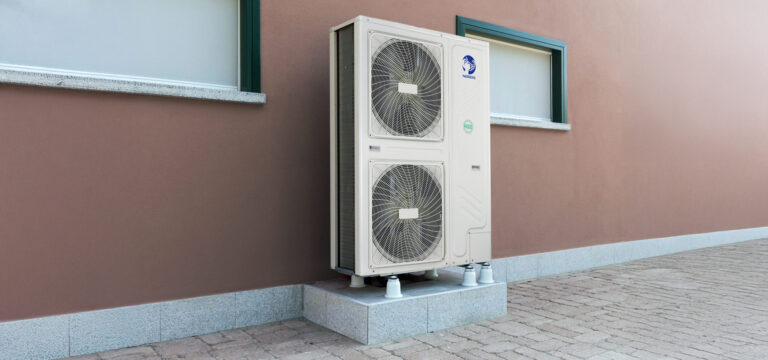
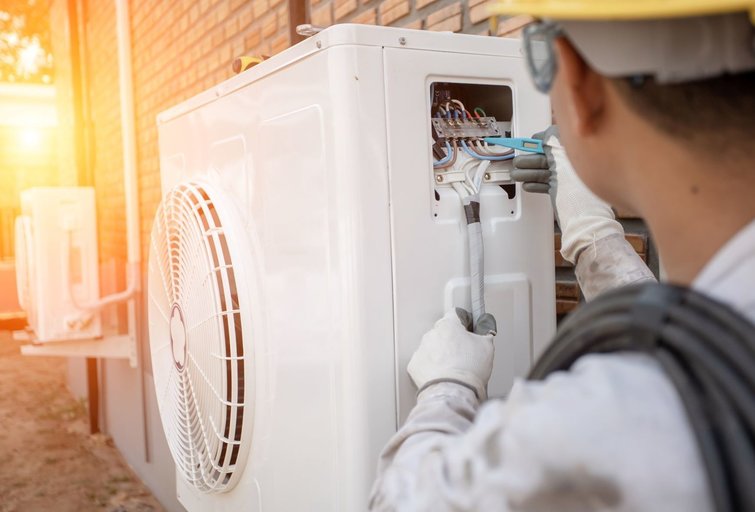
Air-to-water heat pumps usually consist of outdoor and indoor units, installed outside and inside the house respectively. In the ideal case it is enough to drill a hole through the wall to install the pump. The intervention in the house may be bigger if the refrigerant pipes have to be run through several rooms or if the resident also wants to renovate the heating system.
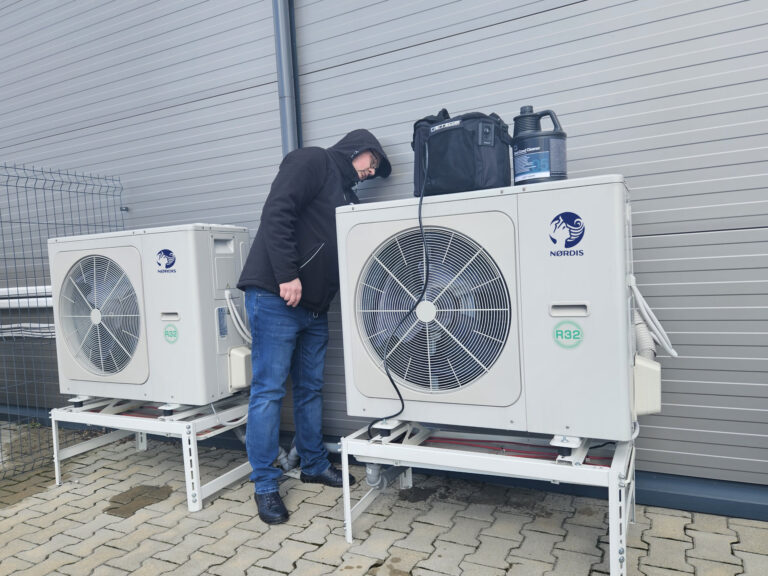
An indoor unit without an integrated hot water tank is usually installed in the boiler room of the house, because together with the hot water tank it needs quite a lot of space; one with an integrated tank can be installed anywhere, even in the kitchen, as long as the room is heated. According to M. Beniušis, the outdoor unit must be placed in a location protected from strong wind blowing directly at it and from direct sunlight. The wind may blow from the side, but not straight at the unit, because that makes its operation harder, and the unit may start recording errors and switching off. In direct sunlight the heat pump may misread the outdoor temperature, assessing it as considerably higher, so the unit may not start working. The most suitable place must be chosen individually in each case by the installer, taking into account the cardinal directions and possible installation nuances.
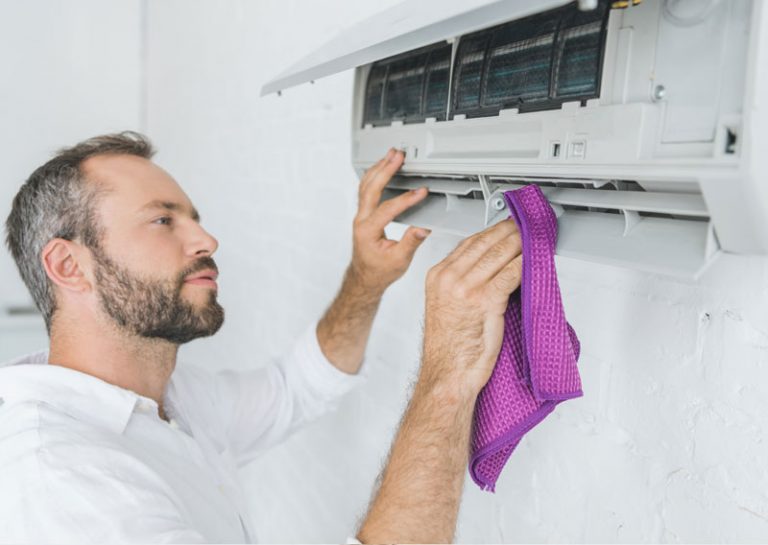
“An installed heat pump does not need special maintenance; it is only advisable to check the filters and the water pressure in the system once a year. A properly selected and correctly installed air-to-water heat pump can last for many years. For owners of older houses, what makes it an even more economical investment is the opportunity to use state support and receive compensation payments when replacing heating equipment that uses fossil fuel,” points out M. Beniušis.