

Planning to install a heat pump? A specialist explains when it is best to do so
The worrying energy crisis and rising prices have prompted many to look for more efficient and economical heating solutions. Mindaugas Beniušis, head of the Heating and Air Conditioning Department at Baltic Refrigeration Group, a company offering building heating and cooling solutions, is convinced that a properly selected air-to-water heating system in a high-energy-class home is always a good investment, so for those planning to replace their equipment, now is the right time.
First, make sure the building is airtight
As gas prices rise, even those who had put off this decision for years have rushed to think about upgrading their home heating system. There is more than one possible solution, but without expert advice it is not always easy to choose correctly and not get lost among them.
M. Beniušis points out a common mistake: people hope to save money by renovating only the heating unit, not the home itself. If the house is in poor condition, investing in a new heating system may not pay off. The heat will simply escape through the windows, walls and doors.
“First you should ask yourself what you are planning to heat – the house or the outdoors? If the home is old and leaky, your bills will still be high regardless of the heating system you choose, whether gas heating or a modern air-to-water system. So if you are planning to upgrade the heating system in a house that is not new, its renovation should be at the top of your priority list,” says the specialist.
According to M. Beniušis, the building’s energy performance rating is one of the most important criteria for anyone planning to upgrade a heating system. Energy performance classes of buildings are expressed on a nine-class scale: the highest is A++, the lowest is G. An air-to-water heating system works efficiently not only in the highest class, but also in buildings rated B. The latter class is usually reached after a high-quality renovation of the building.
The heat losses expected in the building determine how much heat it needs, and the output of the heat pump must be chosen accordingly. If the building’s energy performance is assessed incorrectly, you risk choosing a pump that is not powerful enough and will not generate the required amount of heat, or a pump with too much power that will simply use its energy inefficiently. In either case you will overpay and will not get the maximum benefit.
When a house is airtight, free of thermal bridges and of a high energy efficiency class, rooms warm up to the desired temperature faster. The benefit is twofold: a lower-output unit is enough to heat the rooms, and the final heating costs are low.
Lower electricity consumption
For those who want to save even more, the specialist recommends a comprehensive solution: installing a solar power plant together with the heat pump.
“The heat pump runs on electricity, so its cost can be offset by installing a solar power plant. This solution makes it possible to significantly reduce bills not only in winter, but also in summer, when the energy produced is used not for heating the home but for preparing hot water,” advises a representative of Baltic Refrigeration Group.
Other smart solutions and modern heat pump control technologies also help reduce electricity consumption – the ability to adjust the pump’s operation according to the outdoor temperature curve, or to install temperature-regulating thermostats in the rooms, ensuring smooth and efficient heat pump operation.
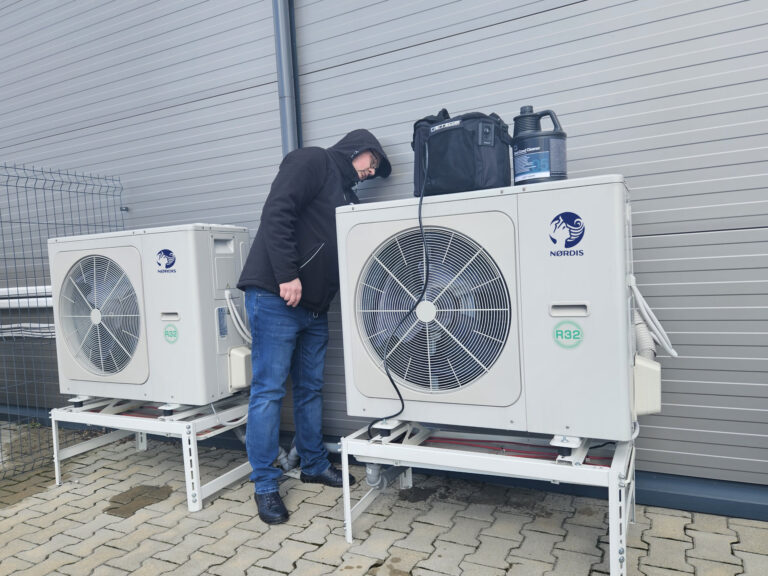
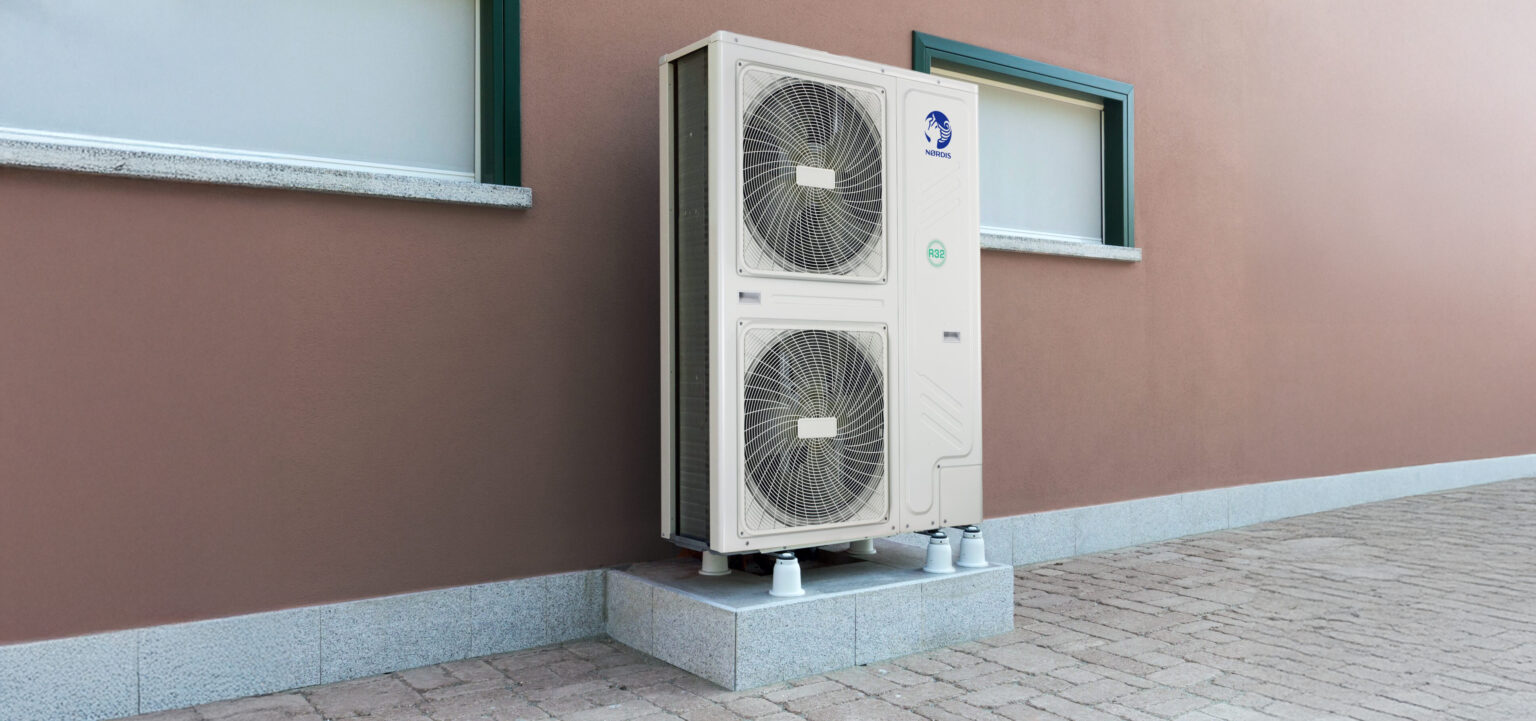
Perhaps the most popular choice among Baltic Refrigeration Group customers is the NØRDIS Optimus Pro Split series of heat pumps. These air-to-water heat pumps are designed for space heating and domestic hot water production, using the heat in the outdoor air. The heat pumps provide pleasant warmth in winter and hot water all year round.
The NØRDIS Optimus Pro Split series is built on DC technology. The technology optimizes the operation of the system and provides a comfortable amount of heat in the room with the lowest electricity consumption, even when the outdoor temperature drops to -25 degrees.
The heat pump system can be combined with underfloor heating, radiators, fan coil units and domestic water heater systems, so there is no need to invest in rebuilding the entire system.
“There are also very expensive heat pumps on the market, and NØRDIS heat pumps are not inferior to them in quality, although they cost considerably less. We receive positive feedback about the reliability of these pumps both from heating system installers and from customers who especially value their quiet operation,” says M. Beniušis.
There are reasons to choose a heat pump beyond economics
Although the popularity of air-to-water heat pumps is closely linked to economic benefit and the wish to save, according to the specialist this is not the only reason that encourages people to choose this efficient heating system. Convenience is one of the factors especially valued by those who previously heated their homes with solid fuel.
“Before the crisis, firewood prices had not risen, so heating this way was not expensive. But who wants to be a stoker if a warm home can be enjoyed without any hassle or worry? That is one of the advantages: you do not work for the heat pump, it works for you. Forget cleaning the boiler room, chopping and storing firewood, and constantly making sure the fire does not go out. Heat pumps save not only money but also time,” says M. Beniušis.
The advantages of an air-to-water heating system over gas heating show in the simplicity of design and the variety of engineering options.
“To install gas heating, you first need a suitable room, a gas heating installation project, and all the equipment must be installed properly. Obtaining the necessary permits and carrying out measurements and design work takes a lot of time. With heat pumps it is much simpler. During a consultation, a seller or contractor will help you choose suitable heating equipment, and installation will take 1–2 days. It is also worth thinking about the future: if you plan to install a solar power plant, it will not help you save with gas heating,” says the specialist.
M. Beniušis notes that the popularity of air-to-water heat pumps has recently been growing not only among private homeowners. Those who manage commercial premises have also rushed to upgrade their heating systems. The observed trends have prompted Baltic Refrigeration Group to expand its range with more powerful air-to-water heat pumps.
“Previously we could offer customers air-to-water pumps of up to 16 kW, but soon we will also offer 30 kW systems, which connect into cascades and can reach up to 180 kW of output. Demand is growing, so we are trying to ensure supply,” says the specialist.