

The Best Solution for Staying Cool in Summer – Air Conditioning
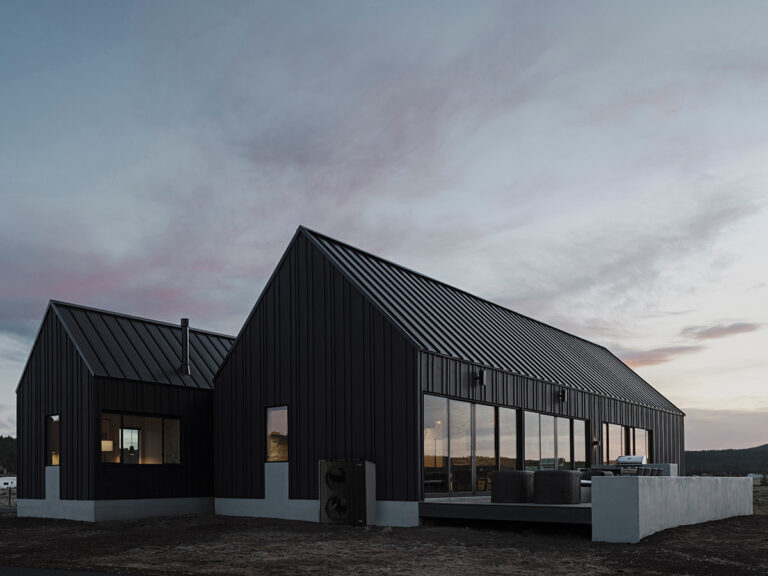
Changing construction habits and the highly energy-efficient insulation of modern houses often turn homes into greenhouses during summer. When planning new homes or renovating existing ones, residents often dream of large windows that bring in light and create a cozy atmosphere. However, once summer arrives, they realize that these windows also let in a large amount of heat. Strong insulation prevents the heat from escaping, leaving homeowners with a new challenge: how to cool their homes during heatwaves.
“The biggest challenge in summer is cooling down rooms heated by the sun. This issue is especially common for residents with large south- or west-facing windows, those living on top floors, or in houses with dark roofs that radiate heat straight into the rooms. Modern homes are built with thick layers of insulation, which means they don’t ‘breathe.’ That’s why we increasingly see new homeowners installing air conditioners either before moving in or immediately after,” explains Inga Pauliukaitienė, a specialist at Baltic Refrigeration Group, representing NØRDIS air conditioners.
Heat Enters Through Windows and Roofs
Large panoramic windows, especially those facing south, are one of the main reasons homes get uncomfortably hot in summer. The bigger the windows, the more direct sunlight enters the room, heating the floors and walls. The stored heat is then released back into the room at night, keeping it hot indoors even when outside temperatures have dropped.
Residents of top-floor apartments or houses with metal or dark roofs also suffer, as these roofs can heat up to 70°C during the day, transferring heat indoors almost continuously.
“The simplest way to solve this problem is with an air conditioner that runs efficiently around the clock, maintaining the desired indoor temperature. This also helps avoid stuffy nights, when it’s hard to fall asleep. At night, all NØRDIS air conditioners have a sleep mode that keeps the air at the optimal temperature, adjusting it by 1–2 degrees per hour,” says Inga Pauliukaitienė.
She highlights that choosing the right cooling capacity is critical. It should be determined individually, not only based on the floor area, but also on the ceiling height, building’s energy efficiency, and window orientation.
“In theory, a 25 m² room requires a 2.5 kW air conditioner, but the choice can vary depending on factors such as roof type, windows, and room volume. If the unit is being installed in a top-floor apartment or a home with large south-facing windows, a slightly more powerful air conditioner may be selected. The right capacity ensures both efficient and economical cooling,” she explains.
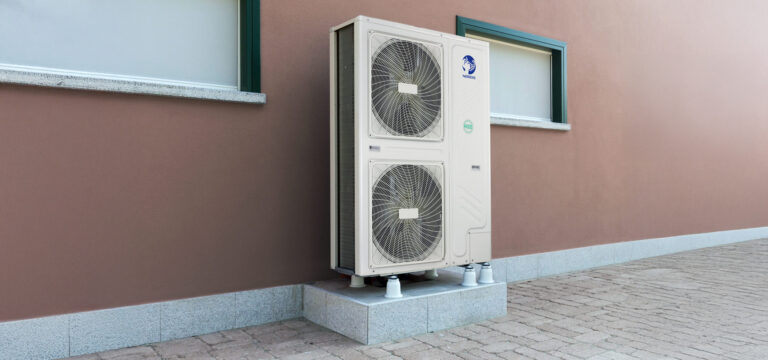
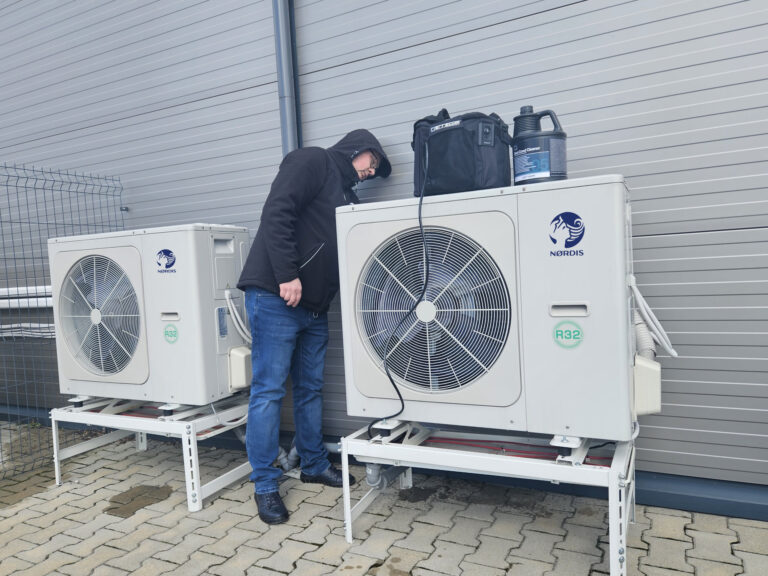
Modern air conditioners come with sensors that adjust their output according to room temperature, reducing electricity consumption. If the unit is correctly sized and outdoor temperatures don’t exceed 53°C, it will work effectively. Following some installation rules, such as placing the outdoor unit in a shaded spot or under a canopy, further improves efficiency.
Returning to a Comfortably Cool Home
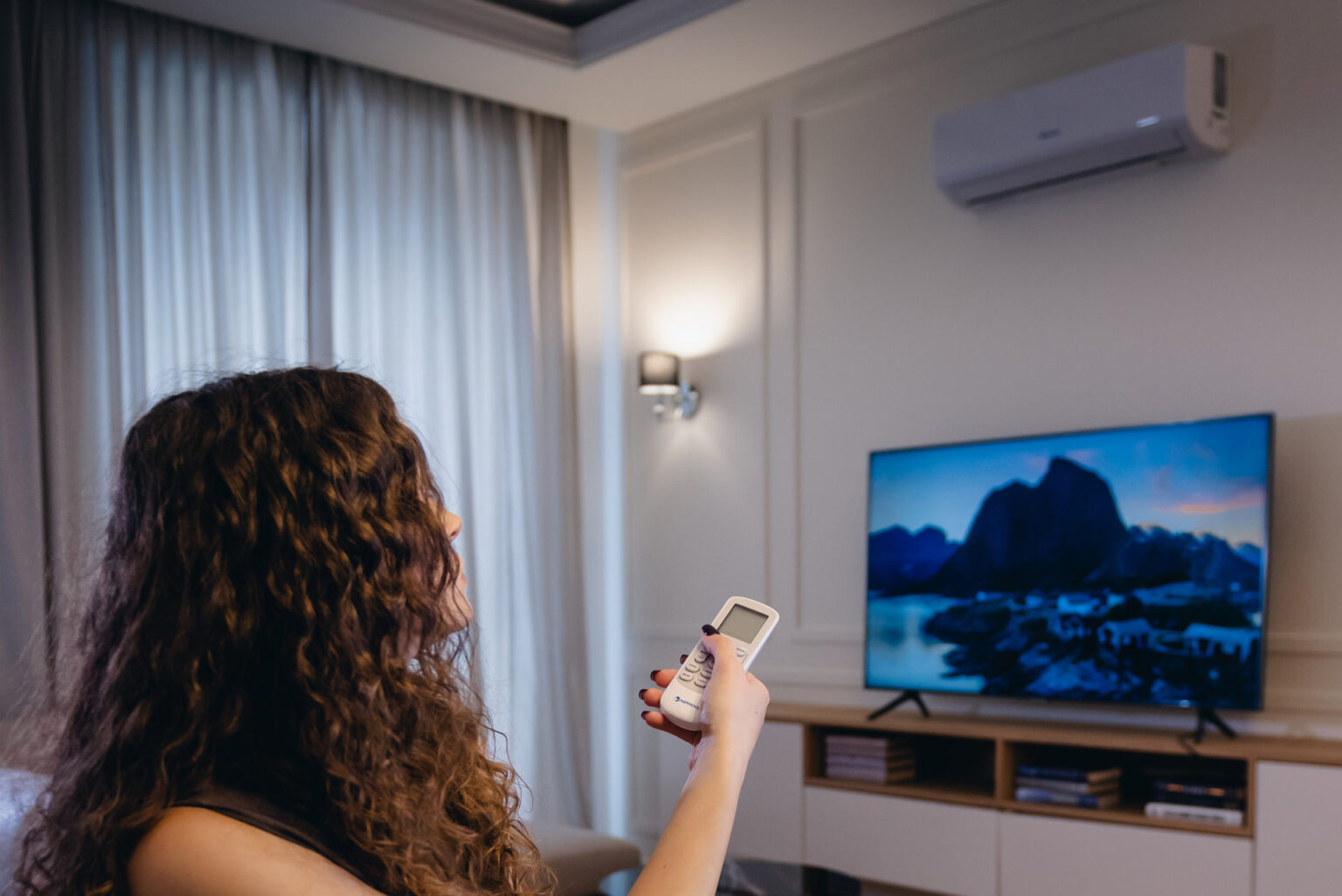
Homeowners often worry about returning from vacations to overheated homes that are hard to cool. But modern technology offers solutions: NØRDIS air conditioners can be controlled remotely via Wi-Fi, allowing residents to pre-cool their homes before arriving.
“All NØRDIS models also feature a popular turbo mode for rapid cooling. This can be activated remotely or at home. However, since the system runs at maximum speed and changes room temperature very quickly, it’s not recommended to stay directly in the cold airflow,” says I. Pauliukaitienė.
Because the selection of air conditioners is wide, she advises consulting a specialist before purchase. Professionals can recommend the best installation location, the right capacity, suitable models, and additional features.
“For example, many people think one indoor unit is enough to cool several rooms in an apartment. In theory, it’s possible, but in practice, the cooling won’t be evenly distributed. That’s why specialists usually recommend a system with multiple indoor units,” she adds.
She explains that uni-split systems have one outdoor and one indoor unit, making them ideal for cooling a single room. Multi-split systems, on the other hand, connect multiple indoor units to one outdoor unit, efficiently cooling two or more rooms. The advanced NØRDIS multi-split system supports up to four indoor units.
Time to Upgrade Older Units
Each year, air conditioners evolve with new features and improved efficiency, meaning units installed 10–15 years ago cannot compare to today’s models. EU regulations have also changed—in 2016, a requirement came into force mandating inverter-type air conditioners, which replaced the older On-Off systems.
“Older units worked at maximum power until the set temperature was reached, then shut off, only to restart once the room heated up again. This consumed a lot of electricity and created uneven indoor temperatures. Modern inverter air conditioners offer up to six fan speeds, automatically adjusting output to match the actual and desired temperature. They use less electricity, are quieter, maintain more stable indoor temperatures, and last longer,” says Pauliukaitienė.
Refrigerants have also changed. Old On-Off units used environmentally harmful R22 and R407C refrigerants. Today’s models are filled with R32 refrigerant, which is eco-friendly, has a lower global warming potential (GWP), and requires smaller quantities in the system.
“The range of innovative features has also expanded: Wi-Fi control, turbo mode, wind-free cooling, intelligent airflow management, and ‘I Feel’ technology. Old air conditioners no longer meet modern standards or user expectations. That’s why we always recommend upgrading to newer models—they use much less electricity, maintain a stable indoor temperature, and are far more eco-friendly,” concludes I. Pauliukaitienė.